Today, Dr. Franky Abbott shared the dynamics of "return migration to Atlanta with the students in this class. This topic was one of her key research interests when she was a doctoral student at Emory University. Using Census data, she studied the migratory patterns of African Americans as well as people of African and West Indian descent into Atlanta since 1990. Interestingly, she is cautious about finding parallels between this trend and the Great Migration of African Americans from the rural South to the urban North from 1910 to 1970. As mentioned in the last blog posting, some of the Atlanta black migrants in more recent years were actually Northern born individuals, among them New Yorkers, who migrated to Atlanta in search of a better and more affordable quality of life. I could well relate to her lecture as I know several people who lived in New York and New Jersey, but have relocated to Atlanta in the last ten years. In fact, as a student at the University of Miami more than twenty years ago, I had a classmate from Boston who greatly desired to move to Atlanta upon graduation. For her and others, this city appeared as a "black Mecca." Abbott also pointed out that some migrants are Southern born individuals who felt a "call" to return home. This portion of her lecture made me think of the motion picture, "Down in the Delta," which concerns an African American Chicago-based woman (Alfre Woodward) who travels to Mississippi to reconnect with her familial past. She meets her cousin (Wesley Snipes), an Atlanta lawyer who represents the educated black elite represented in Abbott's study though one who migrates to Atlanta not from the North, but from Mississippi. "Called home" where he questions his seeming success, he forms a bond with his cousin of more modest means. She, too, is changed by their meeting and establishes a sense of purpose and regains her confidence as an unmarried mother of two. After Abbott's lecture, the students briefly discussed their final paper topics, which will all - with the exception of one that focuses on storefront churches in the context of African American northward migration during the twentieth century and another that draws attention to the ways in which skin complexion played a role in the success of African American Civil Rights leaders - juxtapose the idea of African American life in cities in conversation with a primary source. The sources the students selected include hip hop music, visual imagery of University of Alabama football fans, the Oklahoma City Thunder NBA basketball franchise, three televisions shows ("Scandal," "Good Times" and "The Cosby Show"), and two films ("The Five Heartbeats" and "The Princess and the Frog"). Next week, they will use Raymond Mohl's research on Miami to explore race relations and Arnold Hirsch's thesis on the "making of second ghettoes" (this thesis was the subject of an earlier blog entry). This lesson will involve their watching a clip of The U," an ESPN 30 for 30 production focusing on the University of Miami football team. At stake will be making connections between race relations in Miami across time and the ways in which race and urban life inform the experiences of African American UM football players during their winning years in the 1980s and 1990s. I look forward to
our next and final class meeting for the semester. This was my first
stand-alone course. It has truly been a pleasure and, indeed, a privilege learning more about
urban black life in America while teaching this subject to an
outstanding group.
Too often when people think of the migratory patterns of African
Americans, most think of the Great Migration, or the early twentieth
century movement of this population from the rural South to the urban
North in search of a better quality of life. Tomorrow, Franky Abbott, a postdoctoral
fellow at the University of Alabama, will discuss the "return
migration" of African Americans to the South during the late twentieth century.The students will, among other things, learn how "return migration" reflects not only Northern-born
African Americans who relocate to the South owing to a desire to make
their dollars go further, particularly as they grow older, but also a
younger Northern-born population that also desires the allure of
Southern cities like Atlanta. These return migration patterns also
include Southern-born African Americans who have a "call" to return
home. This latter population often settles in rural areas of the
South. Using an article that draws on the research of many scholars
including Carol Stack, Abbott will discuss this subject, which was a
key research interest for her when she was a student at Emory University.
Abbott's areas of expertise also include immigrant migration into the
United States and digital humanities. We welcome
Abbott and look forward to hearing her lecture. The class will come
prepared with questions or comments about her assigned readings. As an aside, while thinking about tomorrow's lecture, I was struck by the ways in which it poses tensions, however distantly racially and politically, with a story I heard on NPR this afternoon. The story concerns David Downie, a man who trekked through rural France. Along the way, he met Parisians who - like some migrating northern and urban African Americans, especially well-to-do ones - moved to the countryside in search of better lives away from France's biggest urban center. They are called the "neo-rural" French. Downie wrote about his trekking experiences in Paris to the Pyrenees: A Skeptic Pilgrim Walks the Way of Saint James. Check out the interview here.
Jurnee Smollett-Bell, Nate Parker, and Denzel Whitaker star in The Great Debaters.
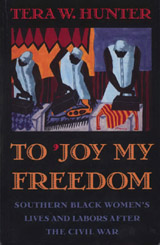
The students learned this week about the experiences of African Americans during the postbellum period. They did so partly by juxtaposing an excerpt from Tera Hunter's study of African American female laborers in Atlanta and an excerpt from Martha Sandweiss' study on the experiences of Georgia-born Ada Copeland faced as a domestic worker in New York (and as the "black" wife of the white geologist Clarence King who passes as an African American) against the 2007 motion picture The Great Debaters. Like the readings, the film uncovers the ongoing oppressed conditions for African Americans amid racial progress. Set in the 1930s, the film depicts the trials and triumphs experienced by four members of an award-winning debate team from a Texas-based African American college who eventually travel by train to debate their white Harvard opponents. Tiffany observed how the movie "perfectly illustrated the 'heightened...awareness of race" in Jim Crow America, which Sandweiss addresses in her examination of the different worlds Copeland and her white husband inhabited in New York. As Tiffany wrote, while maneuvering between "lynchings in Texas to room service in Massachusetts, the 'Great Debaters' felt a "sense of wonder and astonishment...at being far from the crushing racial order of the South" (the latter part of her sentence uncovers her use of a quote from African American novelist Paul Laurence Dunbar). Aaron focused more on the changes in black-white relations - as made evident in the white Harvard student who offered to carry their luggage - the debaters saw while visiting Massachusetts. Lauria noted how blacks were "still see as inferiors" though "Harvard gave [the debaters] a chance to be ...seen as students with great minds." Alexis noted how the Great Debaters did not let "fear...stand" in their way. They forced their opponents to see how ideas concerning "morality and justice" were no longer suitable only for others in distant places, but for them, too. In this way, they were not unlike the African American domestic workers who formed kinship networks in their
community and churches after migrating South for the North to improve
their lives. Kalynn honed in on the debaters' grappling over the "basic rights of human[s]," something she also observed in the Atlanta female washerwomen. But not all was not well in Jim Crow America as made evident in obviously educated Wilson, the African American man who worked as a butler at Harvard even though he could translate Latin. Speaking to this, Roosevelt wrote, in the North, "poor conditions" remained. Roosevelt also detected, too, the ways in which women working as domestic workers faced special challenges, among them, sexual oppression while working in the homes of white Americans. Christin saw how the debaters "faced...[the] stubborn mindsets of people not willing...to change" including a police officer who asked them if they were "supposed to be" in the Harvard hall where their debate would take place. Raven maintained, in the end, there has not been as much racial progress as people believe because "blacks were...and still are underestimated" not unlike the African American washerwomen in postbellum Atlanta.
This week, we will finally discuss African American city life in the
years following the Civil War. The two texts before us are Tera Hunter's
study on African American women's personal and work lives in postbellum Atlanta and Martha Sandweiss' investigation of a hidden interracial romance
in New York during the same period. In both books, the students will
pay close attention to gender. They will be asked to look for how the labor experiences of African American women workers differ
from others. They will also think deeply about the ways in which the
city became the pulse of American life as the century closed and the
challenges/triumphs such a dynamic posed for people of African descent,
women in particular. Among other things, they will ponder how and why residential patterns changed after the war.


 Today, Dr. Franky Abbott shared the dynamics of "return migration to Atlanta with the students in this class. This topic was one of her key research interests when she was a doctoral student at Emory University. Using Census data, she studied the migratory patterns of African Americans as well as people of African and West Indian descent into Atlanta since 1990. Interestingly, she is cautious about finding parallels between this trend and the Great Migration of African Americans from the rural South to the urban North from 1910 to 1970. As mentioned in the last blog posting, some of the Atlanta black migrants in more recent years were actually Northern born individuals, among them New Yorkers, who migrated to Atlanta in search of a better and more affordable quality of life. I could well relate to her lecture as I know several people who lived in New York and New Jersey, but have relocated to Atlanta in the last ten years. In fact, as a student at the University of Miami more than twenty years ago, I had a classmate from Boston who greatly desired to move to Atlanta upon graduation. For her and others, this city appeared as a "black Mecca." Abbott also pointed out that some migrants are Southern born individuals who felt a "call" to return home. This portion of her lecture made me think of the motion picture, "Down in the Delta," which concerns an African American Chicago-based woman (Alfre Woodward) who travels to Mississippi to reconnect with her familial past. She meets her cousin (Wesley Snipes), an Atlanta lawyer who represents the educated black elite represented in Abbott's study though one who migrates to Atlanta not from the North, but from Mississippi. "Called home" where he questions his seeming success, he forms a bond with his cousin of more modest means. She, too, is changed by their meeting and establishes a sense of purpose and regains her confidence as an unmarried mother of two. After Abbott's lecture, the students briefly discussed their final paper topics, which will all - with the exception of one that focuses on storefront churches in the context of African American northward migration during the twentieth century and another that draws attention to the ways in which skin complexion played a role in the success of African American Civil Rights leaders - juxtapose the idea of African American life in cities in conversation with a primary source. The sources the students selected include hip hop music, visual imagery of University of Alabama football fans, the Oklahoma City Thunder NBA basketball franchise, three televisions shows ("Scandal," "Good Times" and "The Cosby Show"), and two films ("The Five Heartbeats" and "The Princess and the Frog"). Next week, they will use Raymond Mohl's research on Miami to explore race relations and Arnold Hirsch's thesis on the "making of second ghettoes" (this thesis was the subject of an earlier blog entry). This lesson will involve their watching a clip of The U," an ESPN 30 for 30 production focusing on the University of Miami football team. At stake will be making connections between race relations in Miami across time and the ways in which race and urban life inform the experiences of African American UM football players during their winning years in the 1980s and 1990s. I look forward to
our next and final class meeting for the semester. This was my first
stand-alone course. It has truly been a pleasure and, indeed, a privilege learning more about
urban black life in America while teaching this subject to an
outstanding group.