Showing posts with label urban. Show all posts

Saturday, October 24, 2015

spring semester and a new course are upon us

Spring course advising is upon us. I am excited about a new course, Bebop to Hip Hop: Young America and Music. Since the early 1990s, many artists have "sampled" music created since World War II - especially music from the late 1960s-early 1970s. The students will explore the social and political issues that influenced music created during this window, and even earlier or later. Among their questions, "How do we find meaning in the beatnik, counterculture, Civil Rights movements and rising conservative politics as the century marched to a close? And what was on the minds of young people, even the musicians themselves, along the way?" Using sheet music from a University of Alabama archive as well as recordings accessed via Youtube and assigned readings students will write a substantial and tightly focused research paper. The two required texts for this undergraduate course are Hettie Jones' memoir and a book of poems by Tupac Shakur. I will also teach Gender, Race and the Urban Space, a graduate course for the second time. I have modified the readings a bit to invite students to focus more closely on a particular category of analysis. Indeed, in this course race, gender and space will always be in front of us, but sometimes it is worth it to home in one of these categories more than the others. Both courses overlap with my next research project, which explores racial and spatial politics in greater Miami from the late nineteenth century to the present day. I am deeply interested in how bodies marked "Other," among them ones of African descent, encounter the urban space even as cities nationally are slowly emptying of lower income residents on the heels of gentrification. This dynamic is occurring alongside of this country's ongoing diversification. According to PewResearch predictions, white Americans will comprise less than 50 percent of the United States' population by 2050. In the neighborhoods in which I grew up, South and Central American immigrants are familiar faces, possibly redefining the word "ghetto" in the minds of many. Which factors figured into cities unveiling this phenomenon? Are there correspondences in any other part of the world? Are they happening with the same intensity as ones here in the States? I am also curious about new movements that have appeared since the 1980s? Are urban people restless, and if so, which ones and for what reasons. How do anger and joy show up in music? I look forward to answering such questions with the students. This will be especially exciting because the courses will be offered around the time I will finally see a music documentary on which I started working on with a Detroit-based crew in 1995 to the marketplace. See the trailer below. And below it: old cut on heavy rotation inspiring my ongoing interest in the urban space.

Tuesday, February 3, 2015

Harriet Tubman as city dweller

After her initial escape in 1849 from Maryland, her home state, Harriet Tubman arrived  in Philadelphia, the fourth largest city in the United States. Although the accounts of her life do not make much of it, an urbanizing America likely helped shaped the meaning of freedom for her. The isolation many city-dwellers felt certainly figured into her psyche. She realized immediately how much she missed her family and how much she felt alone, saying, "There was no one to welcome me to the land of freedom. I was a stranger in a strange land." She decided to return to slave territory and help free her family and numerous others. 


"A Woman Called Moses," one imagined work starring Cicely Tyson, invites us to think about the multi-layered meaning of freedom for Tubman - especially when ones sees Tubman  in Philadelphia 1:36:57 into this 1978 made for television movie. The ending scene, which takes place on a train, a form of transportation that contributed to the rise of an urbanizing and industrializing America, does the same.

Thank you, Harriet (a.k.a. Minty), for your courage. Happy Black History Month. And in the spirit of being inclusive, Happy Black History Year.


Thursday, October 2, 2014

Spring 2015 beckons

Tera Hunter's important study takes us to postbellum Atlanta.
This spring, I will be teaching black urban history for the first time as a graduate course.  It is titled "Gender, Race and the Urban Space."

I plan to rely greatly on excerpts from the growing literature on urbanization and African Americans in urban settings. This is partly because I really want the students to home in on "city" as a category of analysis while keeping other categories like gender and race front and center. 

I welcome the challenge.

This course is an outcome of my joint appointment in the University of Alabama's Gender and Race Studies Department.

Whether we read social, political, economic or cultural histories, the students will be pushed to see how the urban space functions alongside the experiences, attitudes, trials, triumphs, motivations of people of African descent. 

Over sixteen weeks, we will thoughtfully and rigorously see them in anticipated and unexpected narratives. To help me get myself going, I can't help but turn to one of my favorite soundscapes: Marvin Gaye's What's Going On/What's Happening Brother.

And just looking at the titles in my prelim summaries, I get excited about this rich literature again. With able minds beside me, I get to roll up my sleeves  and really pull apart an incredible body of scholarship and re-piece a critical narrative in the "American" story. 

This task is welcomed as I slowly pivot from studying the migratory experiences of African Americans in antebellum Cincinnati, which is my first research project, to 20th century Miami, my second one.

For now, I press on through the Fall semester (and watch the growing list of things to do for the Spring).


Saturday, April 26, 2014

Coming Fall 2014

Sarah Forbes Bonetta Davies, 19th century woman
Though I have not graded the first paper for this course, I am already prepping for next semester. In addition to teaching "U.S. to 1865" (HY 103), I will teach "The Nineteenth Century City" (HY 300) again. Students in this course will spend more time looking at urban life in America during the nineteenth century. The growth of cities begins in earnest in the early nineteenth century. By 1920, more Americans lived in cities than the countryside.

While making fliers for this course, I wanted to find one that has resonances with one of the course readings, a memoir by Eliza Potter, a hairdresser of mixed race. A native of New York, Potter traveled to Europe, working as a nursemaid and later as a hairdresser for wealthy people on both sides of the Atlantic. All this as she eventually  owned a home with her "own fig tree," as she put it, in Cincinnati. Potter's account is helpful to my effort to show students how race, gender and class can nuance what can be learned in any exploration of city life, something I hope students enrolled this spring in Black Urban Culture understand as they prepare for their final exam.

One of the fliers I made advertising "The Nineteenth Century City" features  Sarah Forbes Bonetta Davies, a woman of West African royal ancestry who was reportedly orphaned in 1848 when her parents were killed in a massacre. I was struck by Davies' elegant hairdo in this photograph. Two years later, the king of Dahomey presented her as a "gift" to Queen Victoria. After becoming the queen's goddaughter, Davies apparently spent the rest of her life between her home in England and Africa until her death in 1880.

Davies' life made me think of Potter even though Potter's memoir focuses primarily on her experiences of styling the hair of white Americans and Europeans. It made me wonder if she had in fact ever had the opportunity to style the hair of a person of African descent. Surely in her memoir, one case see the degree to which she emphasizes her desire to treat all people - black or white, rich or poor, enslaved or free - the same. 

"Love and Basketball" (2000)  has a funny reference to Spaudling's sporting goods empire.
Spaulding Collection, New York Public Library

In addition to learning about Potter, the students will also be introduced to various developments that help define city life including the arrival of department stores. They will learn as much via a text on nineteenth century urban culture in the United States. It was written by Gunther Barth. 

Baseball also helped define city life.  A.G. Spaulding, a native of Illinois, was one of the first Americans to make an enormous amount of money on sporting goods including equipment for baseball. 
By the 1880s, men who were confined to New York and Pittsburgh factories and offices, headed to ball parks. Whereas football was initially associated with the wealthy and educated, baseball early on made room for working class urban dwellers. But by the time it got professionalized in the late nineteenth century, the ball clubs - not the players - increasingly had the most power and this was true for decades.

This sport, like many, was segregated well into the twentieth century, oppressing certain players even more. As Barth tells us, not only needed something to divert their attention from their depressing environs, but something that mirrored their own struggle for success. Writes Barth, "the game almost reduced their daily tensions because its ups and downs seemed more momentous than their own lives."

Wednesday, March 12, 2014

dancing in funky streets...can you dig it

 
Today three more students did their spoken word presentations. Ann Marie recasted Martha and the Vandella's "Dancing in the Street" (She did as much with inspiration from Marvin Gaye's 1971 hit "What's Going On" because Gaye helped pen the Vandella's hit. I didn't know this. I am big fan of the album on which this song appears. As I told the students, it was the first album I listened to from beginning to end with tears in my eyes). Katarina Thompson recasted Wilson Pickett's 1967 hit "Funky Broadway" and  Trakayla recasted Parliament's 1975 hit "Chocolate City" (which is an alternately revolutionary and humorous nod to Washington D.C.) All this as we moved beyond discussing themes often associated with black urban life in America, among them resistance, identity, labor and housing.

We will now turn to how how scholars have historically written about African American life in the urban space. While W.E.B. Dubois certainly christened this subfield of African American history with his late nineteenth century study on the Philadelphia Negro, the students learned that in the opening decades of the twentieth century Chicago was the site to which many scholars often turned  to better understand black life in urban spaces. Stay tuned for excerpts from the students' reflections on what we discussed in class today.  Chicago figured greatly into our conversation.

Meanwhile, I look forward to next week's class and hearing their thoughts on two writings that have helped shaped black urban literature: St. Clair Drake and Horace Clayton's 1945 study Black Metropolis, which is indeed centered on Chicago, and Gilbert Osofsky's 1968 study which presents Harlem as an "enduring ghetto." The class will  do well to prepare by first starting with the introductory pages to a recently published edited collection of essays on black urban life by Joe W. Trotter with Earl Lewis and Tera Hunter.


Monday, January 27, 2014

of water and resistance via dance, talk and song


Alvin Ailey's "Wade in the Water" dance from Revelations.
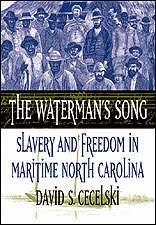
Last week, the students looked at the concept of  black resistance while studying Alvin Ailey’s choreography in “Wade in the Water,” a piece from Revelation,  a famous 1960 performance. They also read excerpts from David Celcelski’s study of black maritime workers in antebellum America. To help them think deeply about resistance across time, I showed them the movements of dancers behind Marvin Gaye performances, circa 1960s, and “Soul Train” episodes from the early 1970s. The idea was to help them see how the Ailey movements presaged the way American vernacular dance reflected the resistance seen in Americans during the Civil Rights and Black Power (and, I might add now,  counterculture) movements. More critically, I wanted them to see how this foreshadowing happened more than a century after those maritime workers expressed independence by moving through space. Whether they wrote in, before or after class, several students were able to pick up on the many things I hoped they would. 

One of our take-aways was understanding how the African American men, free or enslaved, who navigated the waters off the coast of Wilmington, often resisted the oppression they faced as people of color simply because they were mobile. They could thus build traditions – such as singing - and maneuver strategically (sometimes with poor results if the many failed rebellions by blacks who lived in coastal areas are considered ) away from the direct oversight of whites. Decades earlier, some had even been used by the British government to fight white settlers before the American Revolution. As Anne Marie, one student wrote, “The black maritime seamen began to see in a silver lining in the opportunities that could present themselves if they would only rise up and claim them.”


Seahawks' Richard Sherman was criticized for postgame comments.
Marcia said while watching the Ailey piece, which also had a water motif, she did not immediately make the connection that it could be seen as a performance about how “blacks were able to rebel in their own way to the confinements of slavery.” But she finally did, saying, “Flashforward to the 1960s and the dance company…in their own way [was] also rebelling the confinements of being black in America through dance.”  Added Trakayla, African Americans were “almost silently telling whites that they will not be held down.” However, Elizabeth still noticed that the movements were “restricted [and] limited,” and thus, uncover the ways in which oppression continued. Conversely, Alex was able to still see a “celebration” in the Ailey dancers and make connections between black urban dwellers of the past who often “enjoyed living in…cities” because the freedom such a life seemed to offer differed from that endured in the plantation setting. Brandy, another student, noticed how the Ailey dancers seemed to “release their pain…via chest convulsions.”
As a means of helping the students to also keep the “city” in view (especially because Cecelski does something similar when he directs attention away from the black plantation life to black sealife), I also asked the class to pay close attention to how urban life emerges in the United States during the nineteenth century by reading an excerpt from Thomas Bender’s Toward an Urban Vision: Ideas and Institutions in Nineteenth Century America. They discovered that early American leaders like Thomas Jefferson never understood the degree to which American life would be defined by the urban space rather than the open land. Interestingly, because African Americans have long been tied to the urban space, they were always an integral part of this space. Wrote Marcia, “many port cities had large populations of black people,” something that whites feared. As Brandy also relayed, these men were sometimes able to be political by taking messages to blacks in distant places.

Speaking of Thomas Jefferson, Jake, another student, shared his troubles with the man. More critically, Jack was able to draw connections to the scuttlebutt over the recent 18-second post-NFC championship tirade by Seattle Seahawks player Richard Sherman. Jake later emailed me to say that Sherman, who grew up in the tough Compton section of Los Angeles and went on to Stanford University, was under a national microscope for his “trash-talking” because he was African American. Pre-Civil War maritime workers suffered similarly, Jake wrote. Though the urban space is hugely important because it allowed black seaman to work independently, they, too, were constantly being monitored by others.

And speaking of Compton, this week we turn to the idea of black labor by reading an excerpt from historian Robin Kelley’s Race Rebels: Culture, Politics and the Black Working Class. Kelley is among the many scholars since W.E.B. DuBois’ 1935 Black Reconstruction who are interested in recounting labor stories from “below,” which is to say from people who are often oppressed, black and white ones. In the excerpt before us, we will want to continue exploring how the city space figures into the post-World War II social problems faced by black Los Angelenos and moreover, how those problems figure into the emergence of gangsta rap. Though this reading may feel like quite a  jump from our recent look at black seaman, this approach reflects my wish to proceed with themes rather than chronologically as I did when I taught this class last spring. The theme this week is labor, something that certainly figured into last week’s look at resistance. The students will want to find meaning in these two concepts – resistance and labor - while keeping urban life and black identity front and center.

Interestingly, all four themes that will be addressed by the time we finish this week – urban, identity, resistance and labor – figure prominently into the 1974 movie “Claudine,” which we will watch this Wednesday.


Sunday, January 19, 2014

do we need the city to understand the complexities of black life?

Peter Sellers (Chance, the gardener) and Ruth Attaway (Louise, the maid)


This Wednesday, the students will continue exploring “black” urban culture by reading two writings. The first, written by Thomas Bender, reveals the thoughts that some early American leaders had about the open land. The second, written by David S. Cecelski, looks at the critical role that African Americans played in “maritime,” or sea life, before the Civil War. The students will also watch “Wade in the Water,” a portion of a famous dance by African American choreographer Alvin Ailey. 


One of the things at stake in this class meeting is helping the students to see how the black body, which has often been associated with cities, could be found in other spaces. But the biggest issue is how no matter where the black body is found, we see it resisting something.  Among the questions before us: “How do African Americans fit into the vision of rural life that Thomas Jefferson and George Washington preferred?,”   “How did port cities like Wilmington, NC, permit African Americans – free or enslaved – to exercise freedom and independence?”  and finally, “What kinds of emotions do Alvin Ailey capture about black life before the Civil War in ‘Wade in the Water’?”


Finding answers to such questions should prompt us to return to what we have discussed in our first two meetings. In those meetings, we thought about the iconic Miss Anne of 1930s Harlem, Miley Cyrus and slam poetry performances  and the ways in which a gardener learns about the world around him via television.  All of these things made us think about black identity, or how we come to have agreements about what we think blackness is and how the city sometimes helps us find answers. 


Before the students departed last week, they were all given opportunities to turn in short replies to questions that were designed to stimulate discussion and thinking. I enjoyed reading what was turned in as I got a better sense of how some of them are digesting the material. If any of the others have more thoughts, they were welcomed to share them via email before we meet again. It is always good to see them thinking things through. Sometimes I have to step back from what I have read or watched before I really understand my position on it. I want to now share a few ideas that some of the students had after seeing excerpts from the 1979 movie “Being There,” which introduced us to the gardener in question, and after reading the Susan B.A. Somers-Willet article on slam poetry.


Anne Marie thought that Chance, the gardener, could understand “black life without the city.”  Though she did not say as much, I wonder if she believes this after seeing his interactions with Louise, the black maid who gave him his meals, or because of the images he saw of African Americans on television (something that Trakayla, another student, understood). Worth noting, Anne Marie was more explicit about Chance’s ability to understand black rural life. She said he could do as much if he saw pre-Civil War depictions of African Americans on television.


Marcia, another student, said while Chance was introduced to black life on television, he only understood its “complexities” once he got out into the city. Marcia was also reflective about the Somers-Willet article. She rightly saw that Somers-Willet was as interested in showing how African Americans share their identity as a marginalized group via slam poetry as she was in showing how such poetry “challenge[s]” its audiences who are often white middle class people (Brandy, yet another student, also understood this). I would have loved to hear Marcia and the rest of the class pull apart the idea of “challenge” and whiteness more. Why should white audiences be challenged when they hear the many topics about race discussed via slam poetry? This question is pertinent as we read Bender's article, which addresses something specific - maybe something beyond land - that early and antebellum American whites cherished.


As we go forward, we should keep thinking about all of these difficult issues and always keep the city, or urban life, black “identity” and now black “resistance” in view.


Tuesday, January 14, 2014

urban life and black identity via spoken word


I had a good first meeting with the students in this course last week. We discussed the iconic "Miss Anne" character against Miley Cyrus. One aside: there is a slight change in how this blog will be presented this semester. Whereas in the past I have tried to present the students' thoughts via their writing, because this is now a discussion-driven course, there will be fewer writing posts. Instead, the students will present some of the new things they are learning via a spoken word performances, which will be posted here in the weeks ahead. In fact, we will take up the issue of how spoken word gain traction in American society nationally in the 1990s. Tomorrow, among other things we will discuss how black identity has become a critical part of the spoken word movement.  Some of the questions they should be thinking about include, "How did black life become associated with urban living?" and "How does urban life manifest in spoken word performances?" I want them to also  think about whether spoken word performances reinforce some of the stereotypes many people have about black life in America. One reason why this issue is worth addressing, according to scholar Susan B.A. Somers-Willett, is because white middle class people are often the audience for such performances. Perhaps in supporting such events, they are observing - rather than actively engaging - their historical role in some of the issues being discussed by African Americans via this art form. As we prepare to tackle these and other topics, see above a well known spoken word piece in the 1997 movie Love Jones, which unveils a young African American man's romantic overture. It is hard not to miss the ways in which black masculinity issues are intertwined with his references to black culture and black love.

Sunday, January 5, 2014

first course reading


.British heiress Nancy Cunard in Harlem circa 1930s.

I don't remember the first time I heard the words "Miss Anne," the dismissive nickname used for a white woman or white girl. I do recall being intrigued when a colleague told me about Carla Kaplan's recently published study on an untold narrative: white women in 1930s Harlem. Most people who are familiar with the life of African American novelist-playwright Zora Neale Hurston have heard of Charlotte Mason, a patron of Hurston's during this period. I'd heard, too, of Nancy Cunard, a wealthy British woman and activist, who - like Mason - figures into the story of black arts in Harlem. While reading the opening pages of Miss Anne in Harlem, I couldn't help but think about the ruckus surrounding Miley Cyrus' music and videos of late. I decided to pair the first chapter of this book with one Cyrus video as a means of initiating this course's interest in race and the urban space in the United States. I look forward to meeting the students this coming Wednesday and discussing these and other issues.

Thursday, January 2, 2014

on history and culture


I am uploading documents to the University's Blackboard system today, preparing to teach this course for a second time. The students will have many of the readings that I used last spring, but also two books, one of them an autobiography that blues singer B.B. King wrote with David Ritz and a picture-storybook by Lynda Barry titled The Good Times Are Killing Me. King's life will, among other things, allow us to see how his migration to Memphis from Indianola, Mississippi, helps tell a particular story about urban life for African Americans in the lower south during the first half of the 20th century. Barry's book, which concerns a friendship between a white girl and a black girl, permits us to to tackle many issues that concern the urban space, high among them, housing, identity, kinship and race. Notably, Barry, a noted cartoonist-artist,  brings black musicians into her narrative and because she does, I thought it would be great to pair these two books together. Together, they both create many opportunities to understand the difference between what it means to learn about culture as opposed to "history." I thought it would be important for the students to learn the difference as this is truly a history course even though the word "culture" is in its the title. While there is some overlap in what these two words mean, at stake will always be helping them to see how ideas, things and people change across time. That's what we try to do in a history class. As an aside, I will attend a B.B. King performance in Birmingham about two weeks into the semester. His life resonates partly because my maternal grandfather was one of his childhood playmates in  Mississippi. It will be good to see how seeing him live pushes my thinking about black life across time in the United States - especially in cities.

Thursday, December 19, 2013

the rural space remains part of the equation

I am in Miami, Florida, my hometown, conducting research on black migration across time in this city and Miami-Dade County. In just two days of interviewing individuals who were born or migrated here, I have learned more than I thought I would. I will share more in the coming months as research continues. For now, I was reminded again of the ways in which black life continues to reflects the tensions between urban and rural spaces. Before I left Alabama, I saw two videos that showcase as much. Those videos - one by gospel singers Bebe and Cece Winans and the other by Arrested Develoment are presented above. I will leave it there for now. I look forward to discussing this topic and more with the students enrolled in Black Urban Culture next semester at the University of Alabama. Until then, happy holidays and happy new year.