I am writing on this blog less because this course was an undergraduate course titled "Black Urban Culture" that morphed into a graduate course called "Gender, Race and the Urban Space."
Whereas I once used this space as a way to conduct "flip" teaching (or get students to start learning before they entered the classroom), this process happens differently in a graduate class. Discussions now begin on an electronic "in-house" discussion board called Blackboard. I do not know if it will always be this way.
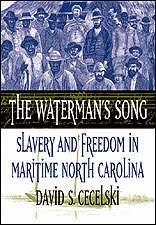
Although I am not blogging as often on this site, I do want to take the time to share something related to the theme if often address: black urban life. My book Remember Me to Miss Louisa: Black and White Intimacies in Antebellum America is now available for pre-order on bookseller websites like Amazon.
The book, which will be published by Northern Illinois University Press this June, uncovers the ways in which (always have to get the requisite "ways in which" academic speak in there) women and children of color migrated outside slave territory before the Civil War with the assistance of an unlikely body - southern white men. Ohio and Cincinnati in particular was filled with newly freed black and mixed race women and children owing partly to its place on the Mississippi-Ohio river network.
Ultimately, relying greatly on correspondence from African American women and children and legal documents as well as published contemporary writings, the book demonstrates that while white men can hardly be excused from their participation in oppressing people of color during the antebellum period, they unveil themselves as being uncomplicated as most human beings when they made decisions to demonstrate some measure of concern for certain enslaved women and the children they had with them. The book is yet another that shows the struggle of unmarried mothers of color in cities, but, again, white men are a part of the conversation in anticipated and unanticipated ways. In providing black or mixed race women and children with the means to leave often rural spaces, white men were inserting them knowingly or unknowingly into emerging urban life in America. This is significant as far too often we do not often see people of African descent in chronicles of rising of industry and urbanization in the United States. Instead, we hear a great deal about such inventions as steamboats and when we hear of white-black interaction, it often involves race riots such as the kind that indeed took place in Cincinnati and other cities like Philadelphia and New York before the Civil War.
The explosion of literature on urban history, one of the fastest growing fields of African American history, is widening the lens on black urban life during the nineteenth century. I look forward to sharing what I've discovered about the experiences of black women and children in antebellum and postbellum Cincinnati and elsewhere. Yes, given the racial hostility in Cincinnati, that city often served as a staging ground for some new migrants who eventually moved on to places as varied as Colorado, Kansas, Washington state, northern Mexico and some even returned to the South.
I also look forward to finding new ways to publicly present in-class discussions on the urban experiences of people of African descent. I have entertained the idea of ending this blog and my The Nineteenth Century City course blog and addressing my students and others via only my teaching and technology site. That site was created because technology - as in films, videos and music clips - is so important to how I teach and even conduct research (film and theatre were prongs in my first graduate degree).
One day at a time on it all. In the meantime, back to teaching - and celebrating the coming release of my first historical monograph. Great way to start the new year.
Wednesday, January 14, 2015
my first history book uncovers an unlikely antebellum urban story
Labels:
remember me to miss louisa,
sharony green
Monday, October 27, 2014
More titles for new graduate course
Here are some more
books to which we will turn in the
new graduate course "Gender, Race and the Urban Space." The students and I will read lots of thick excerpts this time around as I partly want to help them see the abundance of literature in the growing field of urban history, but also help them see the many ways of studying "city," "gender"
and "race" as categories of analyses separately
and collectively. Some of the titles are imagined works and others are historical monographs ranging from the colonial period to postwar America.
We will even look for transnational correspondences between the
ways in which certain bodies are policed. For example, while bodies
marked "Other" on the basis of race, gender and sexuality are under
surveillance in the United States during the rising Jim Crow period at
the turn of the century, bodies some might deem similar are under
surveillance in Ponce, an urban space in Puerto Rico at the same time,
as Eileen Findlay Suarez' study of
Ponce reveals. Above all, we will be greatly interested in how the
urban space and particular bodies encounter one another.As I have talked to prospective graduate students, I have been impressed by their wide-ranging interests. Some of them plan to delve into the issue of gender and the urban space during the Civil War, for example. I am encouraged by these early conversations. Along the way, I wonder how much of my interest in this subject was sparked by my delight in reading Lynda Barry's The Good Times are Killing Me in my early 20s. I first discovered this book in Books & Books, an independent book chain in my native South Florida.
Some of my experiences as an elementary student at Biscayne Gardens Elementary in then-Miami-Dade county resonate against the narrative about an African American girl and white girl in late 1960s-early 1970s Seattle. At the time, I was one of several dozen African American students in then-northwest Dade County being bussed from our predominantly black community to then-predominantly white schools in North Miami. A good many of my classmates were white. Some were Jewish, but many were of Cuban and Puerto Rican descent, too. I do not recall knowing anyone from any other Caribbean country, although before and after World War II my own relatives arrived to South Florida not only from Mississippi and Georgia, but the Bahamas. Indeed, I spent the first five years of my life in the Coconut Grove community of Miami.
As I have written earlier on this blog, I did not
know that the kids from my neighborhood in the then-northwest Dade community of Carol City (now the city of Miami Gardens) were integrating these North Miami schools. I just remember the white students and
teachers mostly being open to us being there. My first best friend who was not from my neighborhood wore the same Winnie the Pooh dresses I wore. She had blonde hair and blue-grey eyes. I can still see her waiting in front of the school for the yellow bus bringing the black children. I was one of those children.As I got closer to our sixth grade graduation, and moving on to a middle school closer to my neighborhood, I heard and saw things that made me think of racial differences more.
But first things first. Did someone say "Fall Break?'
Labels:
eileen findlay suarez,
good times are killing me,
jim crow,
lynda barry,
puerto rico,
sharony green,
university of alabama
Thursday, October 2, 2014
Spring 2015 beckons
![]() |
| Tera Hunter's important study takes us to postbellum Atlanta. |
I plan to rely greatly on excerpts from the growing literature on urbanization and African Americans in urban settings. This is partly because I really want the students to home in on "city" as a category of analysis while keeping other categories like gender and race front and center.
I welcome the challenge.
This course is an outcome of my joint appointment in the University of Alabama's Gender and Race Studies Department.
Whether we read social, political, economic or cultural histories, the students will be pushed to see how the urban space functions alongside the experiences, attitudes, trials, triumphs, motivations of people of African descent.
Over sixteen weeks, we will thoughtfully and rigorously see them in anticipated and unexpected narratives. To help me get myself going, I can't help but turn to one of my favorite soundscapes: Marvin Gaye's What's Going On/What's Happening Brother.
And just looking at the titles in my prelim summaries, I get excited about this rich literature again. With able minds beside me, I get to roll up my sleeves and really pull apart an incredible body of scholarship and re-piece a critical narrative in the "American" story.
This task is welcomed as I slowly pivot from studying the migratory experiences of African Americans in antebellum Cincinnati, which is my first research project, to 20th century Miami, my second one.
For now, I press on through the Fall semester (and watch the growing list of things to do for the Spring).
Labels:
black,
cincinnati,
gender,
graduate,
race,
sharony green,
space,
student,
university of alabama,
urban
Tuesday, April 29, 2014
The Nineteenth Century City
Labels:
puerto rico
Saturday, April 26, 2014
Coming Fall 2014
![]() |
| Sarah Forbes Bonetta Davies, 19th century woman |
While making fliers for this course, I wanted to find one that has resonances with one of the course readings, a memoir by Eliza Potter, a hairdresser of mixed race. A native of New York, Potter traveled to Europe, working as a nursemaid and later as a hairdresser for wealthy people on both sides of the Atlantic. All this as she eventually owned a home with her "own fig tree," as she put it, in Cincinnati. Potter's account is helpful to my effort to show students how race, gender and class can nuance what can be learned in any exploration of city life, something I hope students enrolled this spring in Black Urban Culture understand as they prepare for their final exam.
One of the fliers I made advertising "The Nineteenth Century City" features Sarah Forbes Bonetta Davies, a woman of West African royal ancestry who was reportedly orphaned in 1848 when her parents were killed in a massacre. I was struck by Davies' elegant hairdo in this photograph. Two years later, the king of Dahomey presented her as a "gift" to Queen Victoria. After becoming the queen's goddaughter, Davies apparently spent the rest of her life between her home in England and Africa until her death in 1880.
Davies' life made me think of Potter even though Potter's memoir focuses primarily on her experiences of styling the hair of white Americans and Europeans. It made me wonder if she had in fact ever had the opportunity to style the hair of a person of African descent. Surely in her memoir, one case see the degree to which she emphasizes her desire to treat all people - black or white, rich or poor, enslaved or free - the same.
![]() |
| "Love and Basketball" (2000) has a funny reference to Spaudling's sporting goods empire. |
![]() |
| Spaulding Collection, New York Public Library |
In addition to learning about Potter, the students will also be introduced to various developments that help define city life including the arrival of department stores. They will learn as much via a text on nineteenth century urban culture in the United States. It was written by Gunther Barth.
Baseball also helped define city life. A.G. Spaulding, a native of Illinois, was one of the first Americans to make an enormous amount of money on sporting goods including equipment for baseball.
By the 1880s, men who were confined to New York and Pittsburgh factories and offices, headed to ball parks. Whereas football was initially associated with the wealthy and educated, baseball early on made room for working class urban dwellers. But by the time it got professionalized in the late nineteenth century, the ball clubs - not the players - increasingly had the most power and this was true for decades.
This sport, like many, was segregated well into the twentieth century, oppressing certain players even more. As Barth tells us, not only needed something to divert their attention from their depressing environs, but something that mirrored their own struggle for success. Writes Barth, "the game almost reduced their daily tensions because its ups and downs seemed more momentous than their own lives."
Labels:
baseball,
department stores,
eliza potter,
gunther barth,
sarah davies,
urban
Thursday, April 17, 2014
miami: another postwar case study
![]() |
| I attended the UM when we won our 2nd championship. |
![]() |
| Mohl builds on Arnold Hirsch's study. |
I am looking forward to next week's class and not because it is the last class of the semester. I will really miss the students, some of whom are graduating seniors. I am also looking forward to talking to them about black urban culture as it relates to Miami, my hometown. As mentioned earlier on this blog, my next research project involves an exploration of race and space in Miami across time. At some point along the way, I will be attentive to the impact of the University of Miami's football program on race relations in South Florida. Whenever I say as much, many people mention ESPN's 30 for 30 documentary on the University of Miami, which certainly addresses this issue in passing.
![]() |
| Miami in 1919, Perry Castaneda Collection, UT-Austin |
As also earlier mentioned, my family's own migratory patterns in Miami-Dade County certainly demonstrate the belief by Mohl and others that the movement and relocation of African Americans from segregated housing, or "ghettoes," to other areas that eventually became segregated, or "second ghettoes," was a result of many factors including racial hostility via public policy and realtor practice.
What new things can we learn about the postwar housing experiences of African Americans in urban areas? How can our new understandings of the ways in which "blackness" is understood differently in a county like Miami where people often come from Latin and Caribbean communities push our thinking on this issue?
The map pictured here depicts Miami before the Second World War, shortly after some of my paternal ancestors relocated to Miami from the Bahamas. Other ancestors would arrive from Georgia and after the war, from Mississippi.
Just seeing the words "Atlantic Ocean" on the map makes me long for the smell of salt in the air. My family originally lived in the Coconut Grove section of Miami before relocating to then-Carol City, which is in the "second ghetto" about which Mohl writes (neither are pictured on the map). To us, it was wonderful step up as this neighborhood was mostly middle class and filled with three and four bedroom houses. Carol City is now in the City of Miami Gardens. You can always tell how long someone has lived in South Florida. If they call Miami-Dade simply "Dade County" or Carol City simply "Carol City," they have been there for a while.
Labels:
Arnold Hirsch,
history,
mark rose,
miami,
miami dade county,
race,
raymond mohl,
teresa van dyke,
university of miami
Thursday, April 10, 2014
"to them we are more cookie cut than Pillsbury"
![]() |
| Adiche was born in Nigeria. |
Cole recasted Stevie Wonder's "Living for the City." Iesha recasted Will Smith's "Welcome to Miami." And Dachelle recasted B.B. King's "Sweet Sixteen Blues." Dachelle's presentation was a timely performance because we just finished the second third of B.B. King's memoir. Indeed, we had a lively discussion after I encouraged the students to try and insert King, a Second World War vet and musician, into the postwar narrative that Thomas Sugrue describes in his study on the origins of the urban crisis in Detroit and other Rust Belt cities. While some students believed King's biography was a coded appeal to the mainstream, others did not totally buy it. Few can argue that his initial move from his home in the Mississippi Delta to nearby Memphis does figure into the ways in which many southern blacks left rural communities for cities even though his experiences did not entirely parallel to African Americans who were harmed by a deindustralizing postwar America. As Sugrue writes, when whites, jobs and businesses left urban spaces between the 1950s and 1960s, capitalism posed special burdens for many people of color who were left behind.
King's thoughts about life in America proved interesting. For example, he says he does not believe fellow Mississippian Elvis Presley stole anything from African American musicians. Notably, King also performed at benefits for the Rev. Dr. Martin Luther King.
Next week, we will finish B.B. King's autobiography while also turning to the different ways that "blackness" has been understood in the United States and other places across time. To get this conversation going, we will read an excerpt from Aline Helg's study on black Colombians, watch an excerpt from Melvin Van Peeble's 1968 "A Story of Three Day Pass," view an excerpt from the 1959 film "Black Orpheus" and read an excerpt from Chimamanda Ngozi Adichie's well-received Americanah.
Labels:
adiche,
aline held,
americanah,
black orpheus,
melvin van peebles,
story of a three day pass